
PRESS RELEASE: Australian-made biological solution could end farmers’ dependency on expensive synthetic fertilisers from overseas
Soaring price of widely-used urea fertiliser in Australia
set to prompt rethink of chemical-based soil husbandry
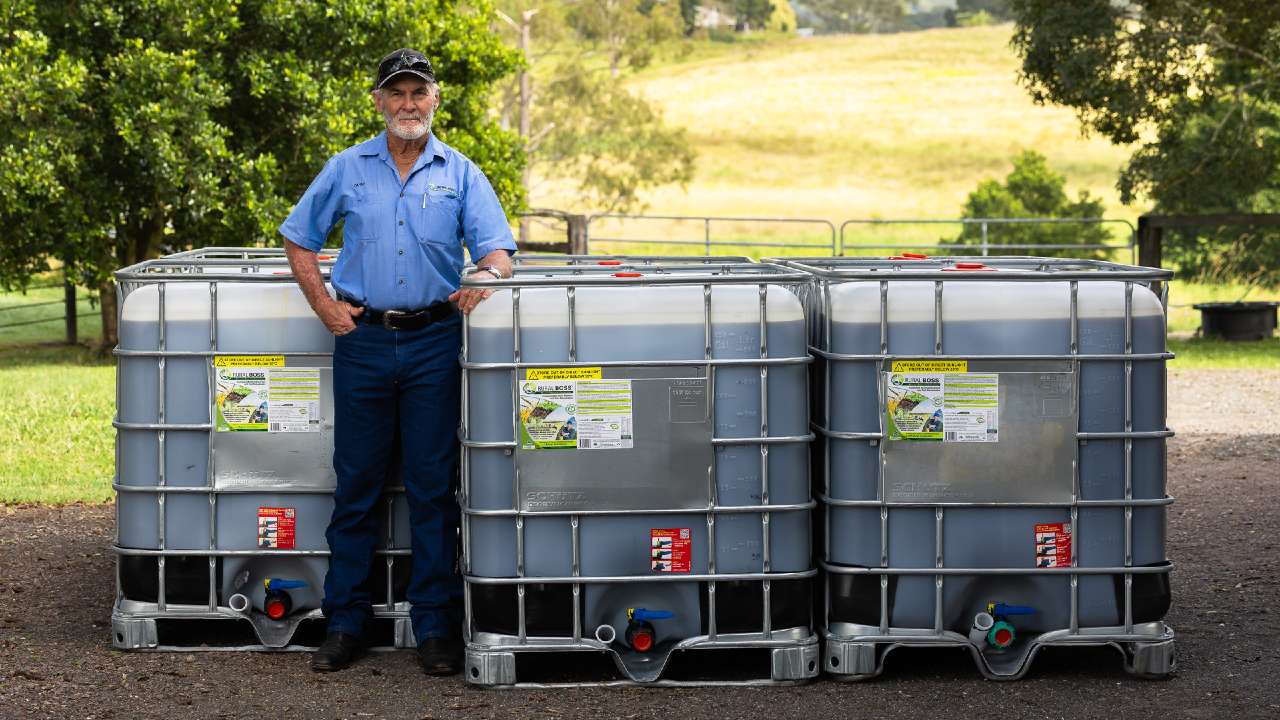
A fifth-generation farmer/grazier on Queensland’s Sunshine Coast is holding an Australian-made solution to an alarming shortage of imported fertiliser and looming food security crisis.
Danny Hood has spent the last 16 years working with like-minded colleagues to change the way Australia grows its food.
The fruit of their labours – and the result of 10 years’ R&D – is a liquid biofertiliser that provides nutrients for healthy plant growth and rapidly improves soil through microbial action on a “nature knows best” basis.
Branded Rural BossTM, the product represents a “secret sauce” that enables farmers to adopt regenerative biological agriculture practices, while reversing the detrimental long-term effects on soil caused by conventional chemical-based, or synthetic, fertilisers.
Farm trials* run by Mr Hood’s company, Global Boss International (GBI), have given rise to positive testimonials in terms of boosting yield (by up to 50%), nutritional content and profitability, while improving water quality, livestock health and soil fertility.
More critically, GBI’s regenerative biological approach is poised to slash Australia’s dependency on increasingly-costly synthetic fertilisers from overseas.
GBI seeks funding to scale-up Rural BossTM production at a time when the United Nations warns a global shortage of synthetic fertilisers caused by the Gulf shipping crisis poses a “food security timebomb”.
Hardest hit are supplies of urea, which accounts for about two-thirds of the nitrogen-based fertiliser used by Australia’s farmers and amounted to nearly half of all fertiliser imports in 2024.
The price of urea in Australia has rocketed from around A$800 in February to as much as A$1,550 per tonne in April.
Terry Stokes, GBI’s Chief Administrative Officer, said: “Farmers are now facing a ‘hurt factor’ because the price of urea has soared – so they are now considering what they can do differently to limit use of urea while maintaining yield.”
Danny Hood added: “We’re not saying don’t use synthetic fertilisers at all. We’re saying reduce your reliance on urea and start using Rural Boss to get biology working to improve your soil’s health.”
Boss is an acronym for “bio-organic sustainable solutions”, of which GBI’s biofertiliser is a central pillar. But education is essential to convince farmers that shifting to a regenerative biological approach will pay dividends in productivity and profitability – while leaving virtually no environmental footprint.
As well as restoring healthy soil biology, use of Rural Boss facilitates cleaner waterways through reduced nutrient runoff from the land and less nitrate pollution. The product has achieved the Australian Certified Organic Standard from Australian Organic Limited and is registered with the Australian Certified Organic as suitable for use in organic systems.
Another environmental benefit emerges from the fact GBI uses chicken manure as a key Rural Boss ingredient – providing an environment-friendly solution for poultry farmers facing mounting difficulties posed by waste disposal.
Mr Stokes said: “Our product starts as organically composted chicken manure that goes through an aerobic fermentation process, which has proved to extract the highest amount of nutrients from any base material. We then add other ingredients to finish up with a beautfifully-rich liquid nutrient that works synergistically with biology in the soil.”
First priority is to provide Australia with a sovereign regenerative biological agriculture solution, so farmers are less dependent on expensive synthetic fertiliser imports and able to grow a more nutrient-dense food supply for consumers – but the GBI team is also keen to expand overseas.
Chief Operating Officer Lou Hatton said: “Given sufficient resources, we have an unlimited production capability that could be transferred anywhere in the world to deliver a product that will reduce, or replace, use of urea. We can even do that in less-developed countries where farmers struggling to grow food could actually develop highly-productive food systems.”
The company already has distribution agreements in Vietnam, Thailand, India and the United Arab Emirates. A similar agreement exists in Singapore for GBI’s Grow retail product, a biofertiliser for home gardens and horticulture.
Now in their autumn years, the GBI management team seeks funding to scale-up production throughout Australia, so farmers and consumers alike can reap the benefits of regenerative biological agriculture.
Mr Hood said: “We want to make things happen swiftly because, at our age, we fear we’ll run out of time. What we’ve been working on all these years is the future of agriculture – because the way things have been done for the last 80 years is no longer sustainable. Nature really does know best!”
*Rural Boss farm trials have involved cultivation of lucerne, chick peas, wheat, sorghum, figs, berries, bananas, sugar cane, tomatoes and other commercial crops, as well as grazing pasture.
Contacts:
Danny Hood, CEO/Managing Director Phone: (+61) 418 795 531
Lou Hatton, Chief Operations Officer Phone: (+61) 419 667 163
Terry Stokes, Chief Administrative Officer Phone: (+61) 499 483 779
Info:
globalbossinternational.com
ruralboss.com.au
Images & PDF:
https://drive.google.com/drive/folders/1Uraksq_b4C6MKIBX5mzZDOjhp2aS_x6Z