
PRESS RELEASE: Why Some Luxury Bags Hold Their Value Better Than Others
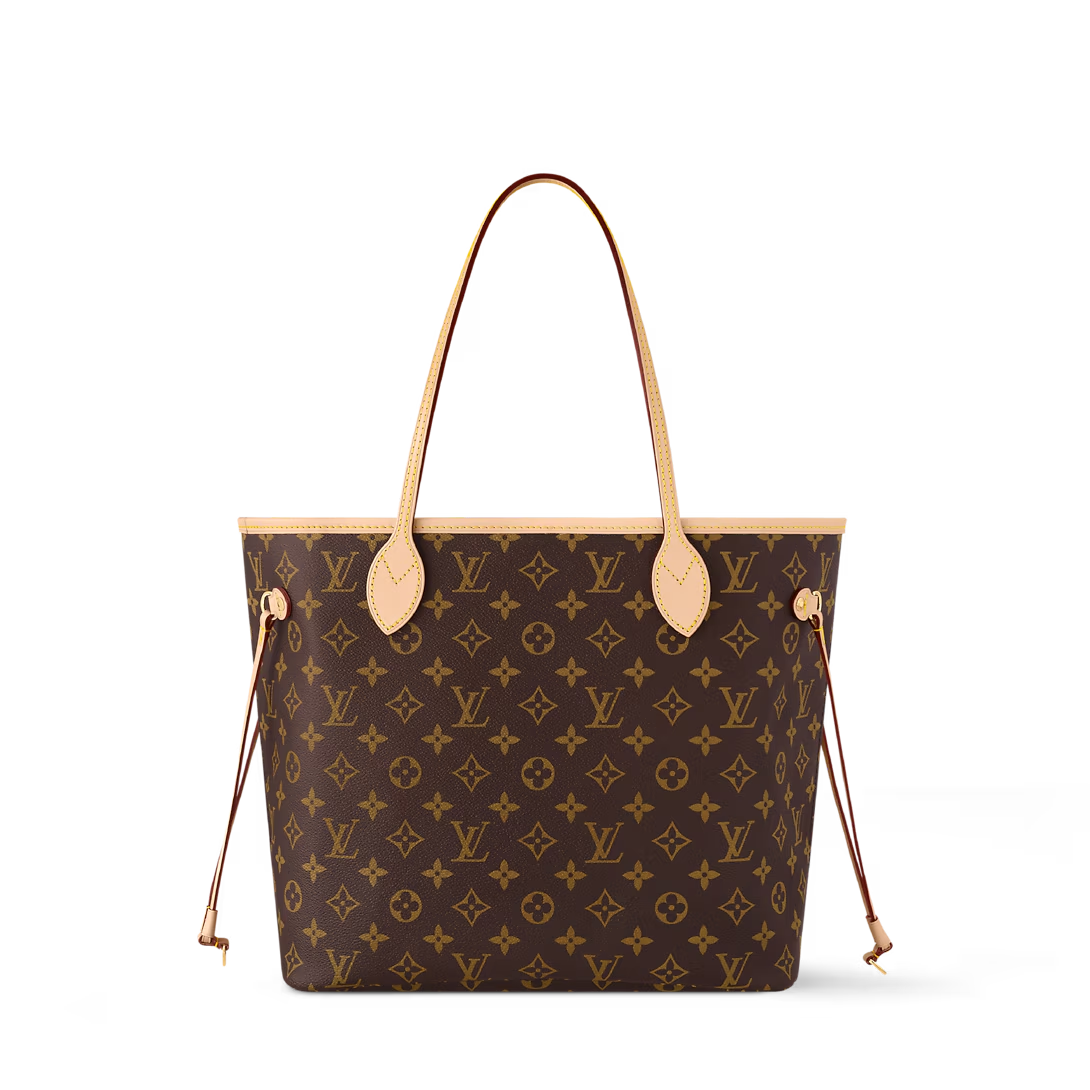
A Chanel Classic Flap. A Hermès Birkin. A Louis Vuitton Neverfull.
Few fashion pieces have achieved the same level of cultural recognition as these handbags. They have appeared on red carpets and city streets, passed between generations, and remained instantly recognisable long after the trends that surrounded them have disappeared.
But what makes one handbag such an iconic accessory, while another loses relevance after one season?
Luxury-grade materials, long-standing heritage and recognisable design all play a part, but the handbags that have been talked about for decades often share something else: a sense of cultural permanence.
More than accessories, they’re symbols of a particular era, a certain lifestyle, even a shared understanding of fashion itself.
The resale market has only highlighted what fashion lovers have intuitively understood for years. Some handbags maintain their desirability well beyond their initial purchase, continuing to attract collectors and new generations of buyers.
The Resale Market Has Become Part of the Luxury Conversationz
Handbags used to be judged purely on craftsmanship and how good they looked on your shoulder. Today, their journey does not necessarily end at the moment of purchase. The rise of luxury resale has opened a new chapter in a handbag’s story, allowing collectors and fashion cult followers to understand how certain pieces perform through multiple generations of ownership.
According to the Bain-Altagamma Luxury Goods Worldwide Market Study, the global luxury market stabilised at approximately €358 billion in 2025, while the secondhand luxury market continued climbing to an estimated €50 billion. The Clair Report, an annual publication by resale platform Rebag, has become the industry’s most-cited resale benchmark.
The data shows which designs have remained culturally relevant, and it’s no surprise that the handbags with the handbags with the strongest resale presence are not always the newest, rarest or most expensive.
Hermès: Scarcity as a Personality Trait
When it comes to enduring desirability, few houses demonstrate the power of scarcity quite like Hermès.
The Birkin and Kelly bags have become among the most coveted handbags in the world. Why? Because access has always been deliberately limited. Unlike many luxury purchases that can be bought immediately online or in-store, Hermès’ clients are limited to two so-called “quota bags” per year, and allocation runs on relationships and purchase history.
Rebag’s 2025 Clair Report shares that Hermès recorded an average value retention of 138%, meaning bags are, on average, reselling for more than their original price. The Kelly Mini II has been reselling for as much as 282% of its retail price, and the Robb Report found that the Birkin resale values have increased by 92% over the past decade.
Scarcity, in other words, can turn an everyday accessory into a valuable asset and genuine investment piece.
The Louis Vuitton Neverfull Effect
Unlike a Birkin or Kelly, the Neverfull was never intended to be elusive. Introduced in 2007, it was created as an elevated everyday carryall, staying true to Louis Vuitton’s long-standing travel heritage. Its symbolic monogram, practical shape and versatility helped it move beyond a seasonal trend and become a staple in women’s wardrobes around the world, simply by being the bag people actually reached for.
In 2023, Louis Vuitton introduced waitlists for the Neverfull in several markets, creating renewed interest around a bag that had already achieved icon status. Research from Brand Vision Insights, which tracked luxury scarcity trends between 2019 and 2025, found that the Neverfull’s resale retention increased following the shift in availability.
The Neverfull demonstrates that scarcity does not always need to mean ‘impossible to find’. Sometimes, it comes from balancing accessibility with desirability, creating a piece that feels familiar, yet still special.
Chanel’s Strategy? Just Keep Raising the Price
The Chanel Classic Flap doesn’t need an introduction. With its quilted leather, interlocking CC clasp and chain strap, it has become one of the most distinct designs in fashion.
Launched in the 1980s at around $1,000, you’ll now find the Classic Flap retailing over $11,000. According to Sotheby’s, resale prices for the bag climbed 93% between 2020 and 2025 alone.
Part of Chanel’s strength lies in consistency. The house has carefully protected the exclusivity of its handbags through controlled distribution, limited discounting and regular price increases. As retail prices continue to climb, a Classic Flap purchased just a few years ago can suddenly feel like exceptional value compared with today’s price tag.
It’s a different approach from Hermès and Louis Vuitton, but the outcome is much the same: a handbag with strong, sustained value retention.
The Handbags That Have Become Part of Fashion’s Visual Language
Not every iconic handbag becomes desirable because it is difficult to find. The most recognisable bags often succeed because we’ve woven them into everyday fashion. They are carried by different generations, styled in different ways and adapted to different moments in life.
Louis Vuitton Speedy (1930)
One of Louis Vuitton’s longest-running handbag designs, the Speedy has barely changed in nearly a century. Originally inspired by the House’s travel heritage, its unmistakable monogram canvas has made it one of fashion’s most notable bags. Worn by everyone from Audrey Hepburn to today’s street-style stars, the Speedy does not belong to just one era, which is exactly why it’s consistently retained relevance.
Louis Vuitton Capucines (2013)
The Capucines is proof that a future classic doesn’t need decades of history behind it. Rather than relying on bold logos, its appeal comes from its elegance, leather construction and discreet detailing. It’s become one of Louis Vuitton’s strongest modern designs without leaning on scarcity at all.
Dior Lady Dior (1995)
Gifted to Princess Diana during a visit to Paris in 1995, the Lady Dior’s Cannage stitching and structured top handle became inseparable from her image almost overnight. Decades later, it remains one of the clearest examples of how a single cultural moment can shape the legacy of a handbag.
Gucci Jackie (1961)
Named after Jackie Kennedy, the Jackie has remained one of Gucci’s most enduring designs. Its softly curved silhouette feels just as contemporary today as it did when it first gained popularity in the 1960s, evolving through different creative eras, from Tom Ford, to Alessandro Michele and beyond, all without losing its identity. It strikes a rare balance between nostalgia and modernity. Gucci has proven to the fashion world that some of the strongest archive pieces never feel stuck in the past.
The Common Thread Among Luxury’s Most Valuable Handbags
There’s no single answer, and no one house does it “best”.
Hermès demonstrates the power of scarcity.
Chanel shows how heritage and pricing discipline can reinforce desirability.
Louis Vuitton proves that recognition and everyday relevance can be just as powerful as exclusivity.
Dior and Gucci show what happens when a brand becomes a cultural moment.
Instantly known, seen in Vogue archives and newer street-style photography, passed down, rediscovered and reinterpreted by each generation. Whether personalised with Louis Vuitton’s Mon Monogram service or simply styled differently by each new owner, the world’s most distinct handbags continue to evolve without ever losing their identity.
Ultimately, the value of a luxury handbag is not only measured by cost, but also by its desirability over time. For anyone considering a piece with longevity in mind, ask yourself these 3 questions:
- Has this design survived more than one trend cycle?
- Would it still mean something in ten years, not just this one?
- Is it recognised and wanted well beyond wherever you happen to live?
The rarest achievement in fashion is not being everywhere; it’s becoming impossible to forget.


