
PRESS RELEASE: Weekly Update – Global Fertiliser Markets – w/e 29.05.2026: INDIA RETURNS TO THE MARKET: – ISSUES FRESH 1.7 MILLION TONNE UREA TENDER AHEAD OF KHARIF SEASON
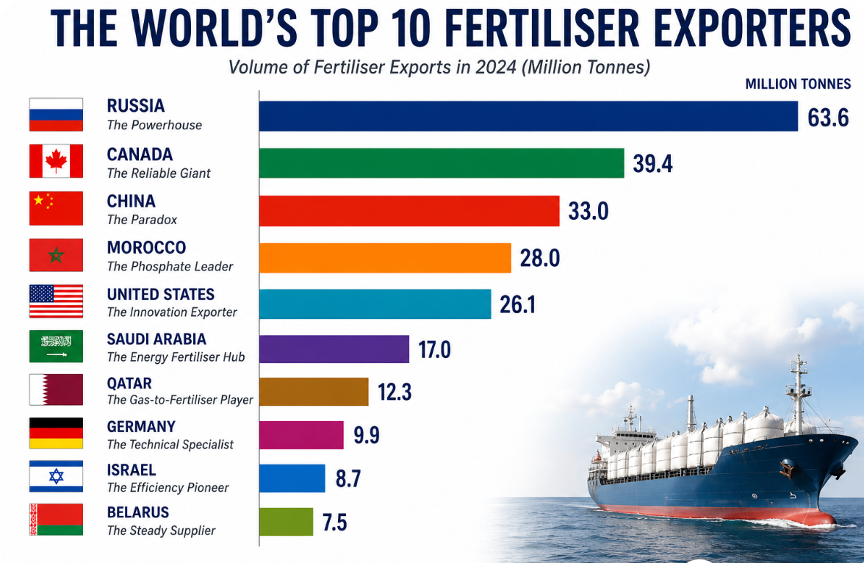
PHOSPHATE – Lack of Chinese Exports & High Sulphur Costs
POTASH – Remains the Most Affordable Major Nutrient
AMMONIA- Availability Critically Tight Despite Softer Buyer Demand
Global fertiliser markets remained heavily influenced by geopolitical disruption and supply security concerns this week, with India returning aggressively to the market to secure nutrient supplies ahead of its main sowing season.
While urea values remained under pressure in some regions due to weak spot demand, the announcement of a fresh Indian tender for 1.7 million tonnes has refocused market attention on the balance between physical availability and buyer caution.
“India’s decision to re-enter the market so quickly confirms that supply security remains the overriding concern globally,” said Stein Haugan, CEO of Australian Fertilizer Corporation.
“Buyers may be resisting higher prices, but governments and importers are increasingly recognising that physical availability is becoming the bigger risk.”
“The fertiliser market today is no longer being driven purely by supply and demand. Geopolitics, shipping disruption and national food security policies are increasingly shaping global trade flows,” he said.
UREA
Indicative Range: USD 550 – 730/t CFR
Global urea markets remained mixed this week.
International spot demand remains relatively subdued as many buyers continue waiting for clarity around Chinese exports and potential easing of logistical disruptions associated with the ongoing Strait of Hormuz situation.
However, sentiment shifted following India’s announcement of a fresh tender seeking approximately 1.7 million tonnes of urea ahead of the upcoming Kharif planting season.
Market participants continue debating the impact of potential Chinese exports. Reports emerged this week suggesting Beijing may be considering limited export quotas, although volumes and timing remain uncertain.
Brazilian demand remains cautious, while Southeast Asian buyers continue limiting purchases due to affordability concerns.
Australian granular urea replacement values remain elevated by historical standards despite the recent correction in international benchmarks.
PHOSPHATES
Indicative Range:
DAP: USD 920 – 980/t CFR
MAP: USD 900 – 970/t CFR
Global phosphate markets remained fundamentally tight this week despite evidence of demand destruction in some importing regions.
The continued absence of meaningful Chinese phosphate exports remains the dominant market driver.
Sulfur remains a critical concern. Ongoing disruption to Middle Eastern sulfur trade routes has pushed input costs substantially higher, forcing several major phosphate producers to reduce operating rates and carefully manage production economics.
The phosphate market remains structurally bullish while Chinese exports remain absent.
POTASH
Indicative Range: USD 380 – 450/t CFR
Potash markets remained comparatively stable this week.
Compared with nitrogen and phosphate products, potash continues to offer the strongest relative value proposition for growers globally.
Chinese import demand remains robust, while Brazilian buyers continue maintaining coverage ahead of key application periods.
AMMONIA
Indicative Range: USD 800 – 1,050/t CFR
Global ammonia markets remain critically tight despite growing resistance from buyers at current price levels.
Production disruptions across Southeast Asia continue restricting availability.
Outlook
Global fertiliser markets remain dominated by four key themes:
• Ongoing Strait of Hormuz disruption
• India’s increasingly aggressive import activity
• Chinese export policy uncertainty
• Elevated sulfur and energy costs
• Urea markets continue searching for direction as weak spot demand collides with renewed Indian purchasing activity.
Phosphate and ammonia markets remain fundamentally tight due to genuine supply constraints and ongoing geopolitical disruption.
ENDS