PRESS RELEASE: Western Australia’s First Inland Marine Turtle Intensive Care Facility Supports Injured Sea Turtles
Western Australia’s First Inland Marine Turtle Intensive Care Facility Supports Injured Sea Turtles
For Immediate Release
25.08.2026
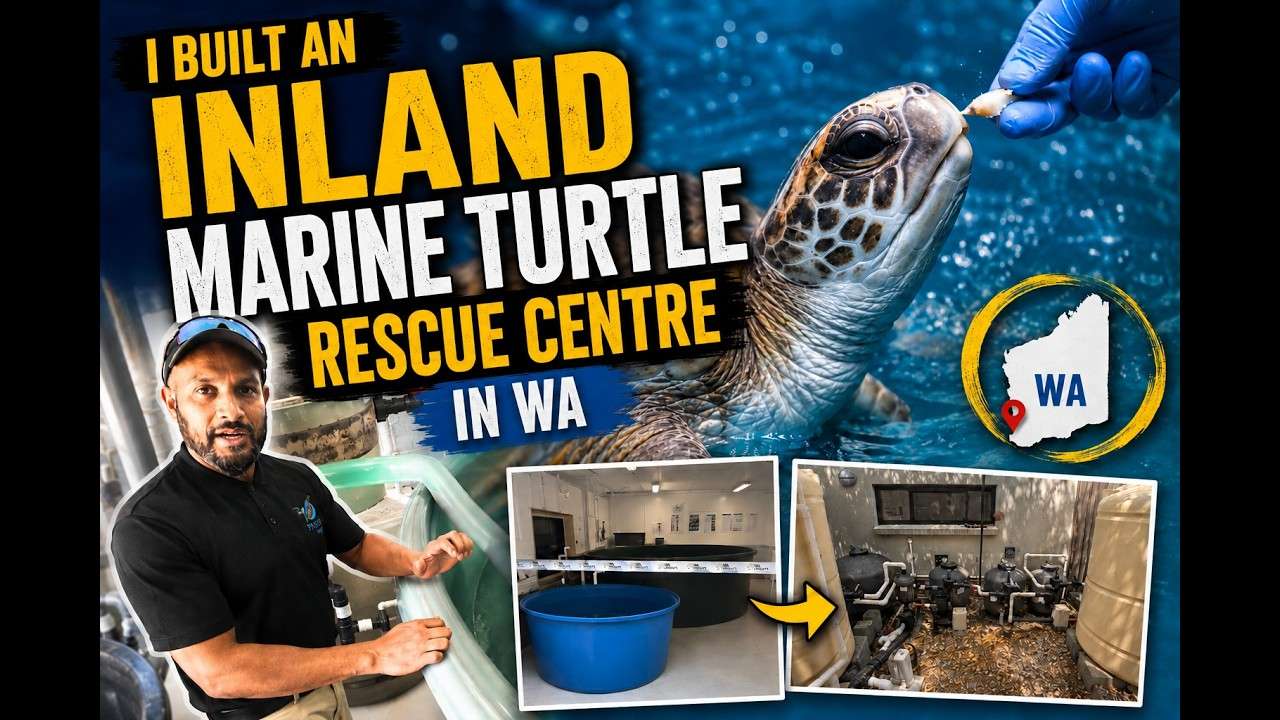
Western Australia’s first inland Marine Turtle Intensive Care Facility is providing veterinarians with a specialised seawater filtration system to stabilise and treat sick and injured sea turtles in tanks.
Located at WA Wildlife, the facility is unique because it operates away from the coast, requiring marine conditions to be recreated inland for animals undergoing treatment and recovery. The system includes temperature-controlled saltwater tanks, mechanical filtration, ultraviolet sterilisation and protein skimming, all designed to maintain water quality while supporting veterinary care.
“Providing intensive care for marine turtles inland is a challenge and requires carefully controlled water quality, temperature and circulation similar to the ocean,” says Dr Dulana Herath, aquatic biologist and founder of PASES Aqua.
“It is not simply a matter of filling a tank with seawater. The system must consistently break down nutrients from animal waste, and recreate suitable marine water quality parameters while also being practical for daily veterinary use.”
A Unique Inland Challenge
Unlike coastal rehabilitation settings, the inland location creates additional logistical and environmental challenges. Seawater must be trucked to site, stored and used within a controlled treatment system. At the same time, saline wastewater cannot be discharged into the surrounding environment.
Because the facility is located on a wetland, used saltwater and backwash water must be captured and properly removed rather than released on-site.
“One of the major challenges was making sure the system could function effectively in a wetland setting,” says Dr Herath.
“You cannot allow saltwater discharge to affect a sensitive freshwater environment, so the wastewater management component was a critical part of the design.”
Water Treatment Designed for Turtle Rehabilitation
The facility’s water treatment process begins in the main rehabilitation tank and moves through several treatment stages before returning to the turtles.
Water passes through a centrifugal filter to remove heavier suspended solids, followed by additional filtration media. It is then treated using a titanium heater and ultraviolet sterilisation system before being directed through a commercial protein skimmer, which removes dissolved organic waste and other contaminants commonly found in closed saltwater systems.
This process helps maintain stable water conditions for turtles that may already be under stress from injury, illness or rehabilitation.
“When marine animals are in care, water quality becomes a fundamental part of treatment,” says Dr Herath.
“A stable and well-managed aquatic environment reduces additional stress on the animal and supports the work of the veterinary team.”
Protecting the Surrounding Wetland
A dedicated intake tank stores incoming saltwater, while a separate discharge tank collects used water and backwash water generated during maintenance. This allows the system to be operated without releasing saline water into the surrounding wetland.
The careful handling of intake and discharge water was essential to ensuring the facility could operate responsibly in its location.
“This project required us to think not only about the needs of the turtles, but also about the surrounding ecosystem,” says Dr Herath.
“The rehabilitation system had to support marine wildlife recovery without creating negative impacts on the freshwater wetland environment around it.”
Supporting Turtle Recovery Inland
The facility has now been operating successfully for approximately one year, with the system continuing to perform reliably while supporting turtle care and recovery.
Its development demonstrates that specialist marine wildlife rehabilitation infrastructure can be established inland when water quality, temperature control, system design and environmental protection are all properly considered.
“This facility shows that effective marine turtle intensive care can be provided inland when the right infrastructure is in place,” says Dr Herath.
“It is a good example of how engineering and environmental management can come together to support wildlife rehabilitation in challenging locations.”
Contact Information
For more information, please contact:
Dr Dulana Herath
PASES Aqua
Email: [email protected]
Phone: 0482591124
Address : Address: 2/9 Merino Entrance, Cockburn Central WA 6164
Resources
YouTube