
PRESS RELEASE: MeOH Weekly Liquid Fuel Markets Update – w/e 18.09.2026: DIRE STRAITS: CRUDE EASES; GLOBAL DIESEL UNDER SEVERE PRESSURE
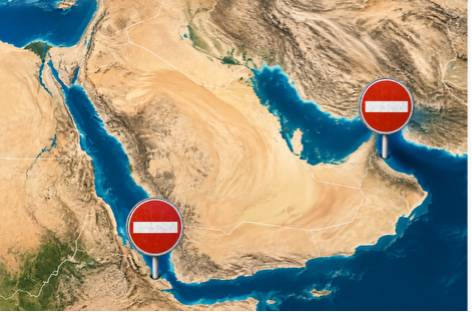
• Brent crude eased late in the week after trading near US$110/bbl earlier in September; Middle East supply disruption remains severe.
• Strait of Hormuz flows remain dramatically below pre-conflict levels; damage to alternative export routes has reduced the market’s ability to bypass the Strait of Hormuz.
• Global diesel markets remain exceptionally tight as Russian refinery outages compound already constrained refining capacity.
• For Australia, the immediate issue is increasingly one of fuel cost rather than physical fuel availability, with diesel prices placing growing pressure on agriculture, freight, mining and regional Australia.
Global liquid fuel markets remained highly volatile during the week as the continuing Middle East conflict, restricted Gulf exports and severe refined-product shortages collided with weakening demand and late-week pressure on crude prices.
Brent crude eased during the final sessions of the week after approaching US$110/bbl earlier in September, but the reduction in crude prices should not be mistaken for a return to normal market conditions.
The International Energy Agency reported this week that crude and petroleum-product flows through the Strait of Hormuz averaged just 7.6 million barrels per day during August — approximately 13.1 million barrels per day below pre-conflict levels.
At the same time, alternative export routes are under increasing pressure.
Saudi Arabia and the UAE had substantially increased exports through routes bypassing Hormuz, but attacks on the Red Sea and Saudi Arabia’s East-West pipeline have reduced those flows. The IEA estimates bypass-route exports fell from around 7.8 million barrels per day in June to approximately 5.5 million barrels per day in August.
“The global oil market is increasingly being defined by where product can physically move rather than simply where demand exists,” said MeOH Energy Chairman Simon Tolhurst.
“That distinction matters enormously for Australia because our economy depends upon international shipping routes not just for crude oil, but for the finished petrol, diesel and aviation fuels we consume every day.”
CRUDE OIL
Indicative Market View: Elevated / Highly Volatile
Brent Crude: approx. US$104/bbl | WTI: approx. US$102–103/bbl
Crude prices moderated towards the end of the week after surging earlier in September, reflecting a combination of demand concerns, emergency rerouting and expectations that some Saudi export infrastructure could return to service.
The underlying supply situation nevertheless remains tight.
The IEA estimates that global oil inventories have been drawing at approximately 2.8 million barrels per day over the past six months, with observed stocks around 507 million barrels lower than at the beginning of the Middle East conflict.
That declining inventory buffer leaves crude markets highly sensitive to any additional disruption around Hormuz, the Red Sea or the major regional pipelines.
“The fact that crude can fall several dollars in a week does not mean the supply problem has disappeared,” Mr Tolhurst said.
“It means the market is continually repricing a very unstable combination of constrained supply, weaker demand and emergency workarounds.”
REFINED FUELS
Indicative Market View: Very Firm – Diesel Remains the Critical Pressure Point
The defining feature of the global liquid-fuel market is no longer simply the price of crude oil.
It is refining capacity and the availability of finished fuels.
Diesel markets remain particularly tight as Middle East disruption coincides with continuing damage to Russian refining infrastructure.
ABC News reported on Friday that diesel refining margins — the so-called crack spread — had increased from approximately US$24 to US$69 per barrel as global buyers compete for constrained supply.
The International Energy Agency has separately reported record pressure across refined-product markets, with diesel, jet fuel and gasoline margins all rising sharply as available refining capacity and product inventories tighten.
“Diesel is now telling us more about the real state of the global liquid-fuels market than crude oil alone,” said MeOH Energy CEO Michael ‘Mick’ Spencer.
“Australian agriculture, freight, mining and regional communities do not run on crude oil. They run on finished diesel — and that is where the global system is under the greatest strain.”
AUSTRALIA – A FUEL COST CRISIS
Indicative Market View: High Prices / Supply Currently Stable
Australia’s exposure to the international fuel market is becoming increasingly visible at the bowser.
Diesel prices remain substantially elevated, while petrol prices across many metropolitan and regional markets are again above A$2.00 per litre.
The pressure is particularly acute for fuel-intensive businesses.
ABC News reported this week that Australian freight operators are now adjusting fuel surcharges as frequently as weekly because of price volatility, while farmers are facing sharply higher diesel, fertiliser and chemical costs.
The distinction between price security and physical supply security is important.
Australia is not presently experiencing a widespread physical fuel shortage. Rather, international disruption is transmitting through higher replacement costs for imported refined fuels.
“We haven’t got a fuel supply crisis, we have a fuel cost crisis,” Container Transport Alliance Australia director Neil Chambers told ABC News this week.
That distinction does not remove the strategic vulnerability.
Australia continues to rely heavily upon imported refined petroleum products, with imports accounting for 79% of refined petroleum products consumed domestically in 2023–24.
Nearly 60% of Australia’s crude and refined liquid-fuel imports in 2025 came from South Korea, Singapore and Malaysia — countries whose own crude supply remains highly exposed to Middle Eastern shipping routes.
AUSTRALIAN FUEL SECURITY
The Federal Government has responded to the deteriorating international supply environment with several measures intended to strengthen domestic resilience.
These include approximately A$7.5 billion associated with Export Finance Australia’s Strategic Reserve function, a A$3.2 billion Australian Fuel Security Reserve designed to hold one billion litres of diesel and aviation fuel, and a commitment to increase Minimum Stockholding Obligation requirements to 50 days.
These measures improve Australia’s ability to withstand temporary disruption.
They do not, however, remove the nation’s structural dependence upon international refining and shipping.
“A strategic reserve is important, but storage and domestic production solve different problems,” Mr Spencer said.
“Stored imported fuel provides a buffer. Australian-made transportation fuel provides capability.”
“For an island nation whose agriculture, freight, mining and aviation sectors depend upon reliable liquid fuels, Australia ultimately needs both.”
MARKET OUTLOOK
Crude Oil: Elevated / Volatile | Diesel: Very Firm | Petrol: Firm | Aviation Fuel: Firm
The immediate outlook remains dominated by three interconnected factors: the ability of Middle Eastern producers to restore reliable export routes, the availability of global refining capacity, and the rate at which international inventories continue to decline.
The IEA warned this week that if Gulf supplies remain constrained and commercial inventories continue to fall, higher prices and further demand reductions may ultimately be required to balance the global market.
For Australia, diesel remains the fuel to watch.
The combination of Middle East disruption, reduced Russian refining output and limited spare global refining capacity means that easing crude prices may not translate directly into equivalent reductions at Australian bowsers.
“The lesson from the past six months is that Australia cannot assume that global liquid-fuel supply chains will always operate normally,” Mr Tolhurst said.
“We are an energy-rich country that remains heavily dependent upon imported transportation fuels.”
“Building Australian capability to manufacture sustainable liquid fuels from Australian carbon resources would reduce that exposure and retain more energy value within the Australian economy.”