
PRESS RELEASE: MeOH Weekly Liquid Fuel Markets Update – w/e 04.09.2026: USS ABRAHAM LINCOLN SUFFERS FOOD AND SUPPLY SHORTAGES
Global Oil Markets Surge As Us-Iran Hostilities Intensify And The Strait Of Hormuz Remains The Focus Of Global Energy Security
Global liquid fuel markets strengthened sharply during the week ended 4 September as renewed US-Iran hostilities and continuing disruption around the Strait of Hormuz returned supply security to the centre of global energy markets.
.
Brent crude finished the week around USD 96/bbl, while West Texas Intermediate closed above USD 91/bbl, with both benchmarks recording substantial weekly gains.
The price movement reflected something more important than simply another volatile week for crude oil.
The Strait of Hormuz remains one of the world’s most important energy corridors, and continuing disruption is restricting normal commercial shipping movements and increasing the risks attached to moving crude oil and refined petroleum products from the Middle East to global markets.
“For Australia, an island nation heavily dependent upon imported liquid fuels, those developments matter,” said MeOH Energy Chairman, Simon Tolhurst.
CRUDE OIL
Indicative Market View: Firm / Volatile
Brent Crude: approx. USD 96.28/bbl | WTI: approx. USD 91.48/bbl
Crude oil recorded its strongest weekly performance since mid-July as markets again priced geopolitical risk into global supply.
Brent increased approximately 7.6% during the week, while WTI gained almost 10%.
The immediate concern remains the Strait of Hormuz.
Commercial vessel movements through the waterway remain severely disrupted as US-Iran hostilities continue, increasing shipping risk, freight costs and uncertainty around the availability and timing of Middle Eastern crude and refined-product exports.
US crude inventories also reportedly declined by approximately 4.5 million barrels during the week, reducing another buffer against potential international supply interruptions.
Alternative export routes provide some relief. Saudi Arabia, for example, can move oil westwards through its East-West pipeline towards the Red Sea. But these alternatives cannot simply replicate the enormous volumes normally transported efficiently through Hormuz.
The immediate crude outlook therefore remains firm and highly sensitive to developments in the Middle East.
REFINED FUELS
Indicative Market View: Very Firm
Diesel remains the standout pressure point within global refined fuel markets.
International diesel refining margins remain exceptionally elevated as restricted supply, refinery capacity constraints and disruption to Russian and Middle Eastern product movements combine with continued demand from freight, agriculture, mining and industry.
This distinction is particularly important for Australia.
“Australian fuel prices are not determined simply by the price of crude oil,” said Mr Tolhurst. “Domestic wholesale prices are heavily influenced by the international prices of finished fuels traded through the Asian market, including Singapore petrol and diesel benchmarks.”
“That means Australian motorists and businesses can experience substantial fuel-price pressure even when movements in crude oil alone might suggest otherwise.”
AUSTRALIAN FUEL MARKET
Indicative Market View: Upward Pressure
Australian wholesale fuel prices turned upwards towards the end of the week.
Australian Institute of Petroleum data for Friday 4 September showed ULP Terminal Gate Prices of 200.8c/L in Sydney, 198.7c/L in Melbourne, 201.1c/L in Brisbane, 198.7c/L in Adelaide and 198.5c/L in Perth.
Diesel remained considerably higher at 239.9c/L in Sydney, 239.0c/L in Melbourne, 240.0c/L in Brisbane, 237.4c/L in Adelaide and 232.4c/L in Perth.
Significantly, Friday’s wholesale prices accelerated after declining earlier in the week. Brisbane diesel, for example, fell from 240.6c/L on Monday to 237.0c/L on Wednesday before returning to 240.0c/L on Friday. Brisbane ULP moved from 197.0c/L on Tuesday to 201.1c/L on Friday.
Retail prices have not yet reflected the full impact of that late-week movement. Indeed, the ACCC reported that average retail petrol and diesel prices had slightly decreased across most locations during the preceding week.
That lag between rapidly changing international and wholesale markets and Australian bowser prices will therefore be important to watch during September.
“Australia’s vulnerability is structural,” said MeOH CEO Michael ‘Mick’ Spencer.
“With only two operating oil refineries — Geelong and Lytton — Australia depends heavily upon international supply chains for the petrol, diesel and aviation fuels required to move people, freight, agricultural production and exports around the country,” he said.
WHY THE USS ABRAHAM LINCOLN MATTERS TO AUSTRALIA
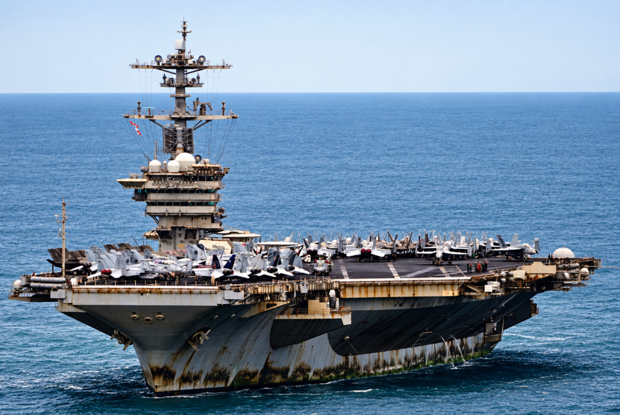
After an extraordinary 286-day deployment supporting US operations in the Middle East, reports emerged of food and other supply shortages aboard the USS Abraham Lincoln — one of the world’s largest and most sophisticated warships.
The image accompanying this week’s update tells the story remarkably well. After 286 days at sea, the carrier visibly bears the consequences of an exceptionally long and difficult deployment.
“If the United States Navy can experience supply-chain pressure operating in the Middle East, Australia should pay very close attention to what is happening to ordinary commercial shipping,” said MeOH Energy CEO Mr Spencer.
“Australia is an island at the end of some very long international supply chains.”
“Every litre of imported diesel, petrol or aviation fuel ultimately depends upon ships, ports, functioning international markets and secure maritime trade routes.”
“The USS Abraham Lincoln provides a powerful illustration of something Australia has perhaps taken for granted for too long — supply chains work extraordinarily well, right up until they don’t,” said MeOH’s Chairman Mr. Tolhurst.
“For Australia, energy security therefore cannot simply mean holding more imported fuel in storage.”
“Long-term energy security must also include the capability to manufacture more of the transportation fuels Australia needs, here in Australia, from Australian resources,” he said.
ENDS