
PRESS RELEASE: MeOH Weekly Liquid Fuel Markets Update – w/e 14.08.2026: Diesel tightness intensifies as depleted inventories and renewed Hormuz disruption reshape product markets.
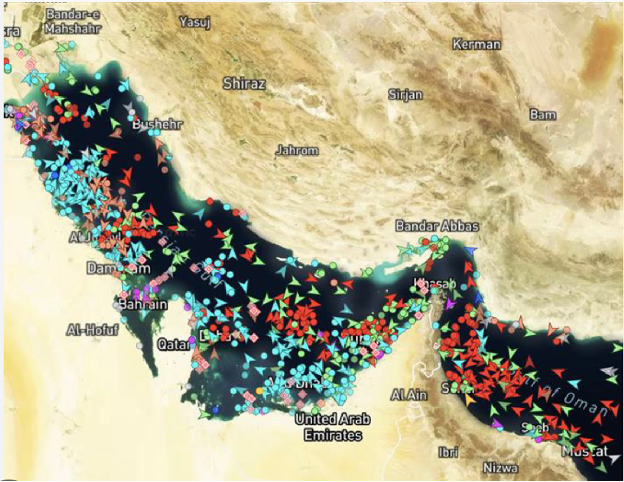
• Diesel prices moved above jet fuel in parts of Europe as acute middle-distillate shortages tightened Atlantic Basin supply.
• Brent crude traded back toward $US90/bbl as US-Iran talks stalled, restoring a geopolitical risk premium
• US Strategic Petroleum Reserve fell to 298.7 million barrels – its lowest level since 1983
• Australian petrol prices remained close to A$2.00/L and diesel close to A$2.50/L, while Diesel supply risks continued to quietly build across transport and agriculture.
Global liquid fuel markets faced renewed upward pressure this week as hopes for a near-term reopening of the Strait of Hormuz faded, tanker and refinery risks increased, and already-thin middle-distillate inventories left the market with little capacity to absorb further disruption.
The defining market development was the inversion between diesel and aviation fuel in parts of Europe. Diesel moved to a rare premium over jet fuel as refiners and traders competed for limited middle-distillate supply. The move reflects exceptional diesel scarcity rather than an outright collapse in aviation demand.
BRENT CRUDE
Indicative Spot Range: US$87–90/Bbl | Firm, with Elevated Volatility
Brent crude moved back toward US$90/bbl as negotiations between the United States and Iran stalled and uncertainty returned over the timing and conditions for restoring secure passage through the Strait of Hormuz. Brent traded near US$87.61/bbl early in the week after gaining approximately 7.5% from the previous period of optimism around a negotiated reopening.
Renewed reports of vessel attacks in the Gulf, together with continuing strikes on energy infrastructure in Russia and the Black Sea region, kept freight, insurance and security costs elevated. The result is a market in which crude benchmarks can ease on weaker demand expectations but remain vulnerable to abrupt geopolitical repricing.
“The crude market is not short of bearish demand signals, but it is short of reliable supply buffers,” MeOH Chairman Simon Tolhurst said.
“That imbalance is keeping a persistent geopolitical premium in every refined product flowing into the Asia-Pacific region.”
U.S. STRATEGIC PETROLEUM RESERVE
Latest Holding: 298.7 Million Barrels | Weekly Draw: 6.1 Million Barrels | Lowest Since January 1983
The continuing depletion of the U.S. Strategic Petroleum Reserve has become a material market issue. CNBC reported on 10 August that “the SPR fell by 6.1 million barrels to 298.7 million barrels last week.” The reserve is now below 300 million barrels for the first time since 1983, compared with approximately 415 million barrels before the US-Iran conflict began in February.
The lower reserve level does not imply an immediate physical shortage, but it materially reduces the scale of the policy buffer available if the Strait of Hormuz crisis worsens or refinery outages deepen. It also increases the market’s sensitivity to weekly inventory data and the pace of any further emergency releases.
MOTOR GASOLINE – ULP 91 / MOGAS 95
Indicative Australian Retail: A$1.82–2.00/L | Singapore MOGAS 95: US$92–96/Bbl | Stable to Firm
Australian discounting cycles provided some relief in selected metropolitan markets, but retail petrol remained near A$2.00/L in many locations as higher crude, freight and insurance costs continued to work through the supply chain.
Singapore MOGAS 95 benchmarks were comparatively stable, supported by available Asian refining capacity and Chinese export flows. That regional liquidity has helped cushion Australia from the full force of Atlantic Basin disruption, although the protection is not absolute: a prolonged increase in crude and shipping costs will eventually feed into local terminal gate and pump prices.
“Australia is benefiting from the depth of the Singapore market, but it is not insulated from the global crude and freight cycle,” Mr Tolhurst said. “The immediate question is how long regional product availability can offset the renewed rise in landed replacement costs.”
DIESEL – GASOIL 10 ppm
Indicative Australian TGP: A$1.68–1.74/L | Singapore Gasoil 10 ppm: US$98–103/Bbl | Firm
Diesel was the strongest and most strategically important part of the refined-products complex this week. Acute supply tightness across the Atlantic Basin pushed European diesel spot values above jet fuel in some regional markets – a rare inversion that highlights the premium now being placed on road freight, industrial and heating demand.
The International Energy Agency estimated that July diesel exports from Russia, the Middle East and Asia were approximately 1.3 million barrels per day lower than a year earlier, equivalent to about 20% of global seaborne diesel trade. U.S. refineries are already operating near 96% of capacity, limiting the scope for a rapid supply response.
Russia has extended its gasoline export ban to 31 January 2027. Restrictions on diesel, marine fuel and gasoil exports remain broader in the near term, although direct producers are expected to regain exemptions from 1 September. The distinction is important: Russian diesel availability may improve at the margin, but refinery damage and operational constraints remain material.
Australian diesel demand remains underpinned by road freight, agriculture, mining and construction. Domestic port inventories may smooth day-to-day volatility, but replacement cargoes will become more expensive if global diesel cracks, shipping costs and security premiums remain elevated.
“The diesel–jet inversion is the clearest signal in this week’s market,” Mr Tolhurst said. “It shows that the pricing pressure is no longer simply about crude oil; it is about the availability of the specific liquid fuel types required to keep freight and industry moving.”
AVIATION FUEL – JET A-1
Indicative Australian Terminal Spot: A$1.76–1.84/L | Global Jet Index: US$101–105/Bbl | Stable to Soft
Aviation fuel was comparatively stable as the northern-hemisphere summer travel peak began to plateau and additional airline capacity was absorbed without a corresponding surge in spot buying. Jet fuel cracks narrowed from earlier crisis highs, particularly where refiners increased middle-distillate output.
“The European diesel premium should not be read as evidence that jet fuel is structurally oversupplied. Diesel and jet compete for similar refinery streams, and a persistent diesel shortage can alter refinery optimisation, reduce jet availability and lift aviation procurement costs with limited warning,” MeOH Chairman Simon Tolhurst said.
For Australian carriers, stable regional storage and continued supply through Singapore are moderating the immediate impact. The risk remains concentrated in freight, insurance and any renewed reduction in Gulf or Asian refinery throughput.
MARKET OUTLOOK
Gasoline: Stable to Firm | Diesel: Firm | Jet Fuel: Stable to Soft
The near-term outlook remains dominated by the Strait of Hormuz, refinery availability and depleted strategic and commercial inventories. IEA and OPEC demand revisions point to softer consumption in 2026, but demand weakness is not yet sufficient to rebuild product stocks or remove the risk premium embedded in diesel and crude markets.
For Australia, the key transmission mechanism remains the landed replacement cost of refined product from Singapore. Petrol may continue to benefit from regional supply liquidity, while diesel is likely to carry the greater upside risk because global middle-distillate buffers are exceptionally thin.
“This is a market in which the headline crude price tells only part of the story,” Mr Tolhurst said.
“Product availability, refinery configuration and inventory cover are now determining which fuel carries the greatest premium – and this week, that fuel is Diesel.”
Sources: CNBC; International Energy Agency; OPEC; Australian Institute of Petroleum; Associated Press; Axios/S&P Global Energy analysis.
ENDS