PRESS RELEASE: The Hidden Cause of Winter Mould Most Australian Homeowners Are Missing
Sunshine Coast, Australia: As mould reappears in bathrooms, wardrobes and window frames across the country this winter, most homeowners are reaching for the wrong fix, and missing a cause hiding outside the home altogether.
Up to one in four Australian households are estimated to have damp and mould in their homes, according to research from the University of Melbourne’s Centre for Health Policy. A separate peer-reviewed study found mould affects as many as one in three Australian homes and is the leading cause of housing-related complaints and disputes lodged with relevant authorities. The health impacts are well documented, with mould exposure linked to respiratory issues, allergies and worsened symptoms in people with existing conditions.
Most advice on preventing winter mould focuses on ventilation: opening windows, running exhaust fans, wiping down condensation on glass. But according to Bret Blackmore, founder of Sunshine Coast-based Flowmate, one of the most common causes of winter mould has nothing to do with what’s happening inside the home.
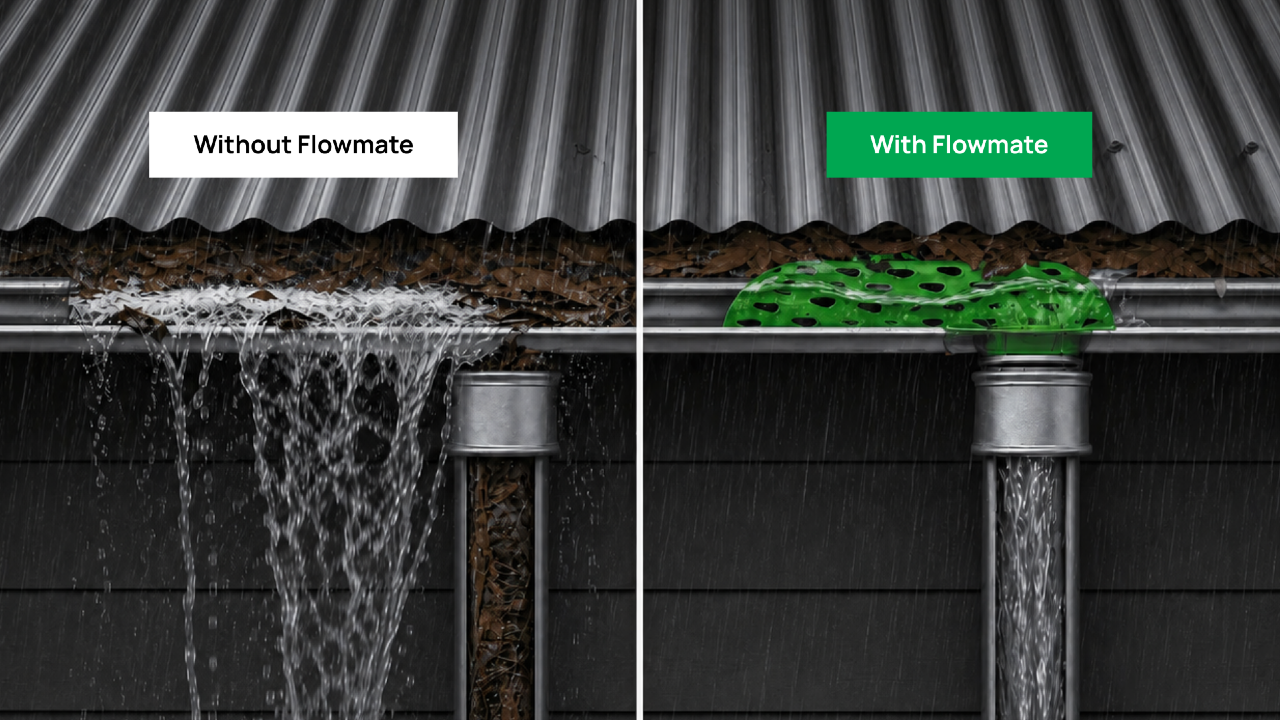
“Everyone blames bad airflow or a leaky bathroom, and sometimes that’s exactly right,” Blackmore said. “But we see it constantly: water pooling against the foundation or seeping in behind fascia boards because a downpipe was blocked and overflowing all winter. That moisture works its way into walls and subfloors, and by the time mould shows up inside, most people have no idea it started outside.”
Blackmore says the timing makes it worse. Winter brings the heaviest sustained rainfall of the year in much of Australia, and downpipes are one of the least-checked parts of a home, tucked against walls, often out of sight, and rarely inspected unless something is visibly wrong.
“A blocked downpipe doesn’t announce itself. It just keeps overflowing, storm after storm, and that constant dampness against the house is exactly the kind of thing that leads to mould nobody can explain,” he said.
To reduce the risk of moisture-related mould this winter, homeowners are advised to:
– Check downpipes for overflow or pooling water at the base after heavy rain
– Look for damp patches, discolouration or a musty smell near external walls, not just bathrooms
– Ensure downpipes direct water at least one metre away from the foundation
– Install permanent blockage protection rather than relying on periodic manual checks
Flowmate is a patent-pending downpipe protection insert designed in Australia. Unlike traditional gutter guards, which sit on top of the gutter, Flowmate installs at the junction of the downpipe and gutter, to filter debris while keeping water flowing freely away from the home. It is a DIY installation, stocked through national retailers including Mitre 10 and Home Hardware, and is currently installed on more than 30,000 homes across Australia and New Zealand.
“If you’re dealing with mould you can’t explain, it’s worth checking outside before you assume it’s a ventilation problem,” Blackmore said. “Sometimes the fix isn’t inside the house at all.”
About Flowmate
Flowmate is an Australian home improvement brand specialising in downpipe protection. Its patent-pending insert prevents blockages at the source, protecting homes from water damage caused by clogged downpipes. Flowmate is stocked nationally through retailers including Mitre 10, Home Hardware, and Continuous Group, and is sold in Australia and New Zealand.