PRESS RELEASE: The Humble Kitchen Sponge Gets A Plastic-Free Makeover
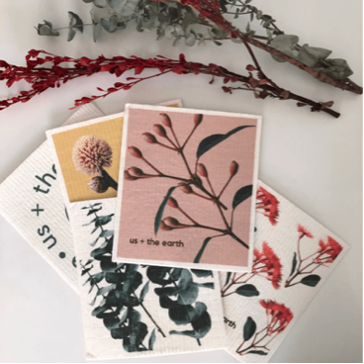
Swedish reusable cellulose and cotton dishcloths offer Australian households a simple alternative to conventional synthetic cleaning sponges.
Australians looking to reduce plastic use around the home are increasingly discovering that some of the most easily overlooked plastics are hiding in plain sight — including at the kitchen sink.
Many conventional household sponges and cleaning cloths contain synthetic materials.
Australian sustainable homewares retailer Joanne Kochanski believes replacing them with plastic-free alternatives is one of the simplest changes you can make in your home.
The Us and the Earth plastic-free sponge cloths are made from 70% cellulose derived from wood pulp and 30% cotton, combining the absorbency and convenience of a conventional cleaning cloth with natural materials.
“People tend to think about plastic bottles, shopping bags and food packaging when they think about reducing plastic around the home,” Joanne said.
“But there are lots of much smaller everyday products we use without really thinking about what they are made from.
“The kitchen sponge is a great example. You use it every day, eventually throw it away and replace it. We wanted to offer people an alternative that works extremely well but doesn’t introduce another plastic product into the home.”
Invented in Sweden in 1947 and used right across Europe, these cloths can be used for dishes, kitchen benches, bathrooms and everyday spills.
Cellulose is highly absorbent and also dries quickly, helping reduce the damp conditions that can cause conventional cleaning cloths to develop unpleasant smells.
Importantly, they are designed to be washed and reused rather than regularly discarded.
The manufacturer advises the cloths can be cleaned in a dishwasher up to 200 times, or washed in a washing machine up to 50 times, substantially extending their useful life.
And when they finally reach the end of that life, their cellulose and cotton composition means they can be composted rather than sent to landfill.
Joanne said the attraction of products such as the sponge cloths was that reducing household plastic did not have to mean radically changing the way people lived.
“Sustainability can sometimes sound complicated or expensive, when some of the best changes are actually incredibly simple,” she said.
“You don’t have to change how you clean your kitchen. You simply change what you clean it with.
“If we can replace everyday disposable or synthetic products with alternatives that work just as well, last longer and can ultimately return to the earth, that’s a pretty easy decision to make.”
The sponge cloths are supplied in sets of five colourful designs and are available through Joanne’s online store.
ENDS