
PRESS RELEASE: RAIL FREIGHT: MAKING AUSTRALIA’S FUEL STOCKS LAST LONGER
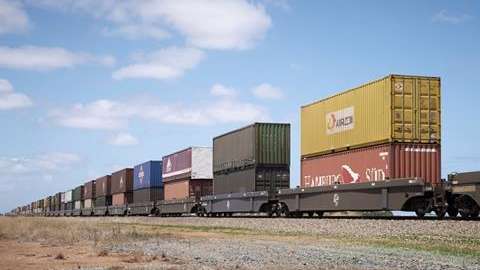
The Freight on Rail Group (FORG) today called on the Federal Government to prioritise freight rail as an essential service in response to heightened fuel prices and supply risks.
FORG said freight rail plays a critical role in maintaining Australia’s economic resilience, food security and export competitiveness, particularly during periods of fuel scarcity.
“Freight rail moves essential goods every day, including food and groceries for Australian households, as well as strategically important exports that underpin national income and regional jobs,” FORG Chair Geoff Smith highlighted.
Rail freight uses a fraction of the diesel required by road for a given freight task.
The rail Industry could support the movement of an additional 500,000 tonnes of freight over six months, saving up to 25 million litres of diesel. On the critical East West freight route alone, a single rail service can save approximately 200,000 litres.
“More rail freight in the system means a given stock of diesel will support the Australian supply chain for a much longer period, and we have immediate capacity available”, Mr Smith said.
The Freight on Rail Group (FORG) acknowledges the significant cost pressures currently facing Australia’s trucking industry and supports the Commonwealth Government’s decision to amend the Fair Work Act to help truck drivers deal with rising fuel costs.
“Rail and road are not competitors, they are complementary parts of the same supply chain. Long‑haul freight is where rail delivers the greatest economic, environmental and productivity benefits, while trucking plays an essential role in first‑ and last‑mile delivery and regional connectivity”, Mr. Smith commented.
Rail can move significantly larger freight volumes of essential goods using less fuel, making it the most efficient and resilient mode for long‑distance freight, especially during periods of fuel price volatility and supply risk.
FORG cautions that pausing or unwinding road‑pricing reform risks delaying the necessary transition to a more sustainable freight system. Governments need to remain firmly committed to the long‑term objective of shifting more freight onto the more efficient method, particularly over long distances.
“Rebalancing freight from road to rail is critical if Australia is serious about productivity, decarbonisation and supply chain resilience,” Mr. Smith said. “Short‑term responses to cost pressures must not undermine long‑term transport reform.”
FORG has made an approach to the Federal Government to optimise the contribution of rail freight to keep supply chains moving. “The industry stands ready to work with government, the trucking industry and supply‑chain stakeholders to deliver a balanced response that supports business, protects consumers and ensures Australia’s freight system remains efficient, resilient and fit for the future”, Mr. Smith concluded.