
PRESS RELEASE: MeOH Weekly Liquid Fuel Markets Update – w/e 02.10.2026: EMERGENCY RESERVES BUY TIME; THEY DON’T FIX THE SUPPLY PROBLEM
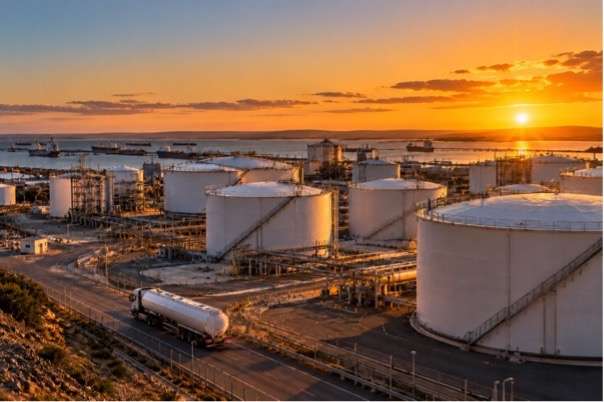
• G7 and IEA countries announced the release of 100 million barrels of crude oil and refined fuels from strategic reserves as governments move to ease pressure on global fuel markets.
• Brent crude closed the week around US$102/bbl, but physical crude and refined-product markets remain significantly tighter than headline crude prices suggest.
• China has curtailed fuel exports while Russian diesel exports remain constrained, adding further pressure to already tight global refined-fuel supply.
• Australian petrol and diesel prices eased slightly during the week but remain substantially above pre-conflict levels.
• For Australia, the distinction remains critical: strategic reserves provide a temporary buffer; domestic production provides long-term fuel capability.
Global liquid-fuel markets experienced another volatile week as improving Middle Eastern crude flows collided with persistent refined-product shortages and an extraordinary intervention by major consuming nations.
The G7 and International Energy Agency countries announced plans to release approximately 100 million barrels of crude oil and refined fuels from strategic reserves over coming months, with a significant proportion of the initial release directed towards diesel.
The announcement pushed oil and refined-product prices sharply lower late in the week.
But the scale of the intervention also highlights the continuing strain within the global liquid-fuels system.
“The release of strategic reserves should provide some immediate relief to the market, particularly for diesel,” said MeOH Energy Chairman Simon Tolhurst.
“But 100 million barrels released from storage does not create 100 million barrels of new production capacity. It buys the market time.”
CRUDE OIL
Indicative Market View: Elevated / Highly Volatile
Brent Crude: approx. US$102.25/bbl | WTI: approx. US$91.11/bbl
Crude markets remained volatile during the week as traders balanced improving physical flows from the Middle East against continuing geopolitical risk.
Middle Eastern seaborne crude exports have recovered substantially from the severe disruption experienced earlier in the conflict, reducing immediate fears of a major physical crude shortage.
That improvement has helped pull benchmark crude prices back from recent highs.
However, geopolitical risk remains significant, and the market continues to place a premium on immediately available physical barrels, with physical Dated Brent trading substantially above futures benchmarks during the week.
The result is an increasingly divided market: headline crude prices suggest some easing in supply pressure, while physical markets continue to signal tightness.
“The market is telling us that crude availability has improved, but conditions are certainly not normal,” Mr Tolhurst said.
“Every improvement in supply is still being measured against the possibility of another disruption.”
REFINED FUELS
Indicative Market View: Very Firm / Supply Constrained
The greater pressure remains downstream.
Global diesel, gasoline and aviation-fuel markets remain constrained by reduced refining availability and restrictions on product exports from several major suppliers.
China’s refiners have curtailed fuel exports during October, while Russian diesel exports remain restricted. Combined with continuing pressure on global refinery capacity, these developments have kept finished-fuel markets substantially tighter than crude markets.
European gasoil — a key international diesel benchmark — fell sharply following the strategic-reserve announcement but remained at historically elevated levels around US$1,390 per metric tonne.
The decision to front-load diesel into the coordinated reserve release is particularly significant.
“Governments aren’t releasing strategic fuel reserves because the system is comfortable,” said MeOH Energy CEO Michael ‘Mick’ Spencer.
“They are releasing them because finished fuel has become the pressure point.”
“Crude oil gets the headlines. But trucks, mines, farms and aircraft operate on refined fuels — and that remains the part of the supply chain under the greatest pressure.”
AUSTRALIA – PRICES EASE, EXPOSURE REMAINS
Indicative Market View: High Prices / Supply Currently Stable
Australian motorists received some modest relief during the week.
The Australian Competition and Consumer Commission reported that, on 30 September, average retail petrol prices across Australia’s five largest capital cities were 236.0 cents per litre, down 1.1 cents from the previous week.
Average diesel prices were 283.3 cents per litre, down 3.5 cents.
The longer-term comparison remains considerably less comfortable.
Capital-city petrol remained 65.1 cents per litre above its 20 February level, while diesel remained 106.7 cents per litre higher.
Regional prices were comparatively stable, with average petrol at 243.2 cents per litre and diesel at 287.5 cents per litre on 30 September.
The ACCC continues to identify international refined-fuel benchmarks as a major determinant of Australian prices, with movements in international markets generally taking around two weeks to work through the domestic supply chain.
For Australia, that means this week’s decline in international diesel prices may eventually provide some additional relief — provided global markets remain stable.
AUSTRALIAN FUEL SECURITY
The coordinated release of international strategic reserves reinforces an important distinction for Australia.
Storage provides resilience against temporary disruption. Production provides resilience against prolonged disruption.
Strategic fuel reserves are an important component of energy security. They provide governments with an emergency buffer when normal supply chains are interrupted.
But reserves are finite.
They ultimately have to be replenished from the same global production, refining and shipping system from which the fuel was originally sourced.
“A reserve is designed to get you through a disruption. It isn’t a substitute for the ability to manufacture the fuel you need,” Mr Spencer said.
“For Australia, the strategic objective should be both – adequate reserves and greater domestic transportation-fuel production capability to strengthen sovereign security.”
MARKET OUTLOOK
Crude Oil: Elevated / Volatile | Diesel: Very Firm | Petrol: Firm | Aviation Fuel: Firm
Markets will now focus on whether the strategic-reserve release can materially rebuild commercial fuel inventories, whether Middle Eastern crude flows continue to normalise and whether global refiners can increase finished-fuel availability.
The immediate intervention may reduce prices and volatility.
The underlying structural issue remains.
Global transportation-fuel supply depends upon a relatively concentrated network of crude producers, refineries, shipping routes and exporting nations. Disruption at any point in that system can rapidly transmit through international markets.
For an island economy heavily dependent upon imported transportation fuels, that exposure carries particular significance.
“Strategic reserves buy time,” Mr Tolhurst said.
“Domestic production builds resilience.”
“Australia has the resources, technology and industrial capability to manufacture more of the transportation fuels it consumes. The events of 2026 continue to demonstrate why that capability matters.”
ENDS