
PRESS RELEASE: Australian Businesses Lose $6 Billion Annually to Preventable Incidents—Digital Risk Registers Offer 45% Cost Reduction
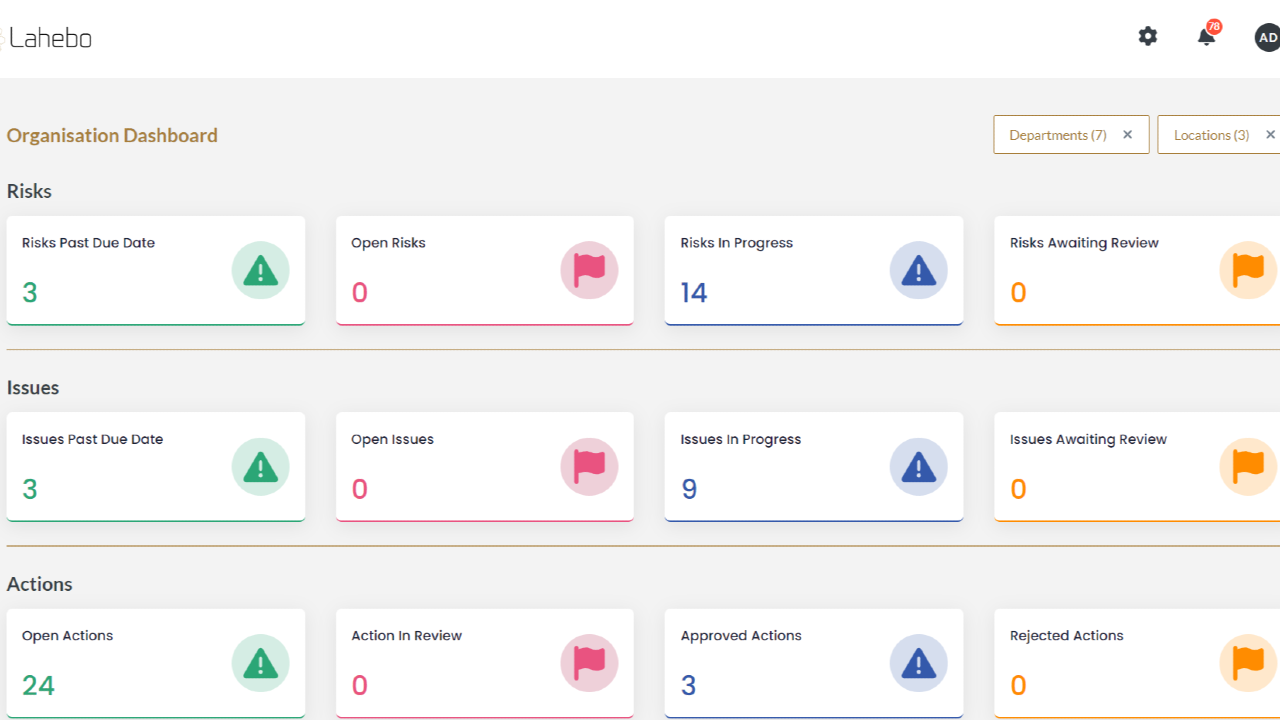
A comprehensive research analysis of Australian business incident data reveals that organizations implementing digital risk registers achieve a 45% reduction in incident costs, with the potential to save Australian employers billions annually. Lahebo Pty Ltd, an Australian-developed Governance, Risk, and Compliance (GRC) software platform, has compiled verified data from Safe Work Australia, APRA, and Gartner showing that proactive risk management is transforming how Australian businesses prevent incidents and improve financial performance.
BODY COPY: EXPANDING THE STORY
The Scale of the Problem
Australian businesses face a persistent and costly challenge from incidents across all operational areas. In 2024 alone, Australia recorded 188 workplace fatalities and 146,700 serious workers’ compensation claims involving at least one week of lost working time. Beyond workplace safety, operational incidents impose substantial costs—downtime incidents cost organizations more than AUD $1 million per incident on average. When considering indirect costs such as lost productivity, recruitment, training, reputational damage, and absenteeism, the estimated annual cost to Australian employers approaches AUD $6 billion.
The Business Case for Digital Risk Registers
Despite these challenges, many Australian organizations continue to operate without a comprehensive, centralized framework for identifying, assessing, and managing risks across all business functions. A digital risk register serves as a centralized intelligence system that enables business leaders to identify emerging threats, allocate resources strategically, and ultimately reduce the frequency and severity of incidents.
Research demonstrates the quantifiable impact: organizations implementing integrated compliance and risk management programs achieve 45% reduction in incident costs. This is not a marginal improvement—it represents nearly half the financial burden of incidents being eliminated through systematic risk management.
How Risk Registers Prevent Incidents
The mechanisms driving this reduction are straightforward. By identifying risks before they materialize into incidents, organizations can implement preventive controls that eliminate or significantly reduce the likelihood of occurrence. By having clear incident response protocols in place, organizations can minimize the duration and severity of incidents when they do occur. By tracking and learning from incidents, organizations can identify systemic vulnerabilities and implement lasting solutions rather than repeatedly addressing the same problems.
Measurable Outcomes and Continuous Improvement
Research on risk management effectiveness provides additional validation of this impact. Companies with robust risk management programs experience 23% fewer financial losses from operational incidents compared to their peers. This reduction reflects both the prevention of incidents and the more effective management of those that do occur.
The effectiveness of a digital risk register improves as organizations mature in their risk management practices. Organizations that conduct regular program assessments achieve 40% better risk management outcomes than those with irregular or ad-hoc review processes. Organizations that follow best practice implementation steps for risk management frameworks achieve 39% better outcomes overall.
Australian Context: Incident Distribution and Prevention Opportunities
The research identifies specific areas where digital risk registers can have the greatest impact. Eighty percent of traumatic injury fatalities and 61% of serious workers’ compensation claims occur in just six industries: agriculture, forestry and fishing; public administration and safety; transport, postal and warehousing; manufacturing; health care and social assistance; and construction. This concentration suggests that targeted risk management interventions in these sectors could yield disproportionate benefits.
The causes of serious claims reveal clear opportunities for risk management intervention. Eighty-four percent of all serious claims involve body stressing, falls, slips and trips, being hit by moving objects, or mental stress. These are not random, unpredictable events. They are foreseeable hazards that can be identified through systematic risk assessment, controlled through engineering and administrative measures, and monitored through incident tracking systems—precisely the functions of a digital risk register.
Mental Health: An Emerging and Significant Category
An emerging and significant category of incidents involves mental health and psychological stress. Claims for mental health conditions increased in 2023-24 and now account for 12% of all serious workers’ compensation claims. Notably, the median time lost from work in mental health claims is almost five times that recorded across all other injuries and illnesses. A digital risk register that includes mental health and psychological wellbeing risks enables organizations to identify high-stress roles, implement preventive measures such as workload management and support programs, and track the effectiveness of interventions.
Regulatory Landscape and Compliance Requirements
For Australian businesses, the imperative for a digital risk register extends beyond operational efficiency and incident prevention. Australia’s Work Health and Safety Act 2011 (Cth) and corresponding state legislation establish a legal obligation for organizations to identify hazards, assess risks, and implement control measures to eliminate or minimize risks to workers’ health and safety. A digital risk register provides the systematic framework for meeting these obligations.
Additionally, the Australian Prudential Regulation Authority’s Prudential Standard CPS 230 (Operational Risk Management), which came into force on 1 July 2025, explicitly requires APRA-regulated entities to maintain a risk register documenting material operational risks and the controls in place to mitigate them. For financial institutions, insurance companies, and superannuation funds, a digital risk register is no longer optional—it is a regulatory mandate.
KEY FINDINGS FOR BUSINESS LEADERS
The research highlights several critical findings for C-suite executives and organizational leaders:
•Integrated risk management programs reduce incident costs by 45%
•Companies with robust risk programs experience 23% fewer financial losses from operational incidents
•Organizations conducting regular assessments achieve 40% better risk management outcomes
•Organizations following best practices achieve 39% better outcomes overall
•Downtime incidents cost organizations more than AUD $1 million per incident on average
•146,700 serious workers’ compensation claims were recorded in 2024
•80% of fatalities and 61% of serious claims occur in just six industries
•84% of serious claims involve foreseeable, preventable causes
•Mental health claims now account for 12% of all serious workers’ compensation claims
•ROI for risk management: 297% over 3 years with less than 6-month payback period
EXPERT PERSPECTIVE
“The data is unambiguous. Organizations that implement integrated compliance and risk management programs achieve demonstrable reductions in incident-related costs. The question for Australian business leaders is no longer whether to implement a digital risk register, but how quickly to do so. The regulatory landscape increasingly mandates such frameworks. The competitive landscape rewards organizations that can prevent incidents and respond rapidly when they occur. And the financial case is compelling: the potential savings from incident reduction far exceed the investment required to implement a comprehensive digital risk register.”
— Lahebo Research Team
CALL TO ACTION FOR AUSTRALIAN LEADERS
In the current climate, not having a digital risk register is itself a significant business risk. The organizations that will thrive in the coming years will be those that move from reactive incident management to proactive risk management.
For C-suite executives, the question is no longer whether to implement a digital risk register, but how quickly to do so. The regulatory landscape increasingly mandates such frameworks. The competitive landscape rewards organizations that can prevent incidents and respond rapidly when they occur. And the financial case is compelling: the potential savings from incident reduction far exceed the investment required to implement a comprehensive digital risk register.
A digital risk register is a strategic asset that enables C-suite leaders to gain visibility into their organization’s risk posture across all business functions, make informed decisions about resource allocation, demonstrate due diligence to regulators and the board, and ultimately build organizational resilience in an increasingly complex and uncertain business environment.
ABOUT LAHEBO PTY LTD
Lahebo is an Australian-developed Governance, Risk, and Compliance (GRC) software platform designed to streamline and automate risk and compliance management for small and medium-sized enterprises (SMEs). Founded in 2019 and headquartered in Mount Waverley, Melbourne, Lahebo provides a cloud-based, user-friendly platform that enables organizations across manufacturing, construction, healthcare, managed services, professional services, and not-for-profit sectors to implement comprehensive digital risk registers and compliance frameworks.
With no upfront fees and flexible, scalable plans, Lahebo empowers C-suite executives and risk management professionals to identify, assess, and manage risks proactively, reduce operational incidents, and demonstrate due diligence to regulators and stakeholders. The platform is designed with SMEs in mind, providing hassle-free setup and offering flexible plans to suit unique risk management needs.
For more information, visit www.lahebo.com or contact the team at [email protected].
RESEARCH METHODOLOGY
This research analysis synthesizes data from Australian government agencies, industry studies, and regulatory bodies to demonstrate the impact of digital risk registers on incident reduction in Australian businesses. The analysis covers all types of incidents, including workplace safety, operational failures, compliance violations, and system downtime. All statistics are verified against primary sources and fact-checked for accuracy.
REFERENCES
[1] Safe Work Australia. (2025). Key Work Health and Safety Statistics Australia 2025. Retrieved from
[2] CyberDaily. (2024 ). Downtime Costs Australian Organisations More Than $1M Per Incident. Retrieved from
[3] Public Spectrum. (2024 ). Australian Cybersecurity Faces Rising Downtime Costs. Retrieved from
[4] Safer Workplaces. (2025 ). The Hidden Crisis Costing Australian Businesses Billions. Retrieved from
[5] SixSigma.us. (2024 ). Compliance and Risk Management: Guide to Navigating Business Challenges. Retrieved from
[6] Australian Prudential Regulation Authority. (2025 ). Prudential Standard CPS 230: Operational Risk Management. Retrieved from